
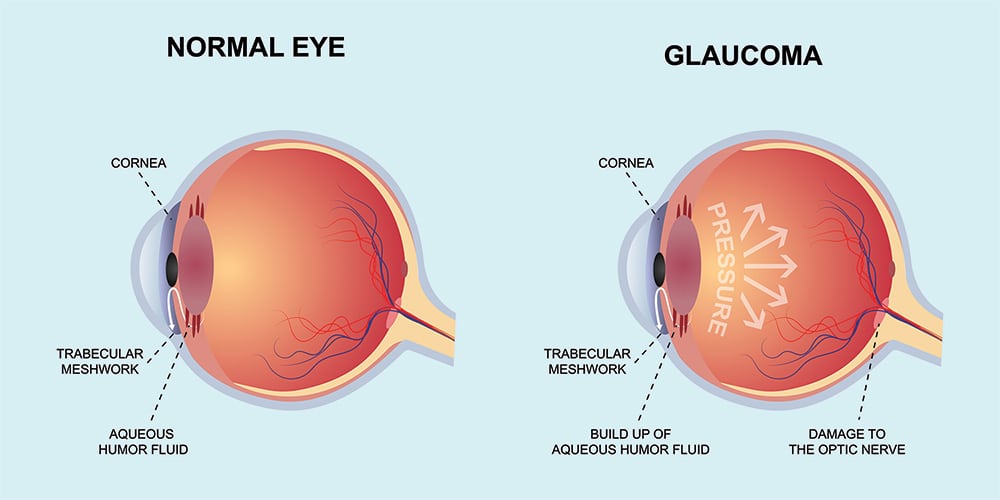
Glaucoma is an eye disease that damages your eye’s optic nerve and it is a condition that often gets gradually worse over time. Usually, damage to the optic nerve comes from fluid that builds up in your eye which increases the overall pressure in your eye, also known as intraocular pressure. It is important to know that damage to your optic nerve can be serious as this sends images to your brain, and if it worsens it can cause permanent vision loss or even total blindness. It is important to also note that some people who develop glaucoma never have high intraocular pressure.
Glaucoma does tend to run in families. If you believe you may be susceptible, it is wise to become well-educated on glaucoma evaluations and treatments. If you are over the age of 40 and have a family history of glaucoma, you should have a complete glaucoma eye exam with an eye doctor every year.
If there are warning signs, such as a high-pressure noted by your eye doctor, seeing a glaucoma doctor or specialist is important to the preservation of your vision as you age. Vision loss with glaucoma is not reversible with treatment, even with surgery. According to the American Academy of Ophthalmology, glaucoma is the leading cause of irreversible blindness for people over the age of 60 years old. African Americans are at higher-than-average risk and can suffer greater loss of vision and earlier onset than other patients do. Being of Irish, Japanese, Inuit, Scandinavian, Hispanic, or Russian descent is also a risk factor. Patients with poor vision or diabetes, who are taking steroids, or who have suffered eye trauma also have elevated risk.
There are several forms of glaucoma, with the two most common forms being primary open-angle glaucoma and angle-closure glaucoma.
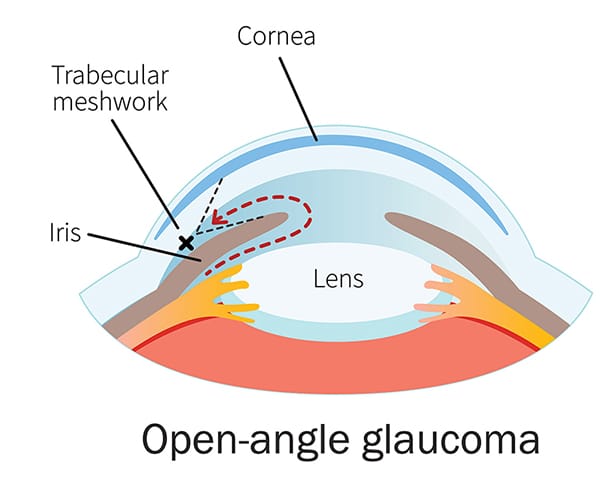
Open-angle glaucoma is the most common type of glaucoma and develops slowly as the drainage area in the eye becomes less functional over time. Many people who have it feel normal and do not notice the change in their vision at first. Inner eye pressure or intraocular pressure builds up because the correct amount of fluid can’t drain out of the eye. With open-angle glaucoma, the entrances to the drainage canals are clear and generally work correctly. The problem occurs further inside the drainage canals, like a clogged pipe below the drain in a sink. Because the initial loss of vision is usually a patient’s side or peripheral vision, the visual acuity or sharpness of vision is often maintained until late in the disease. This can result in progression to a relatively advanced disease, before someone notices the vision loss is present.
If you are over the age of 40 or this condition runs in your family, it is important to see an eye doctor for regular examinations. If glaucoma is detected, your doctor may prescribe a preventative treatment to protect your vision, or recommend you see an ophthalmologist who specializes in glaucoma treatment in Iowa, such as Dr. Gregory Christiansen, Dr. Benjamin Mason, or Dr. Ryan Vincent at Wolfe Eye Clinic.
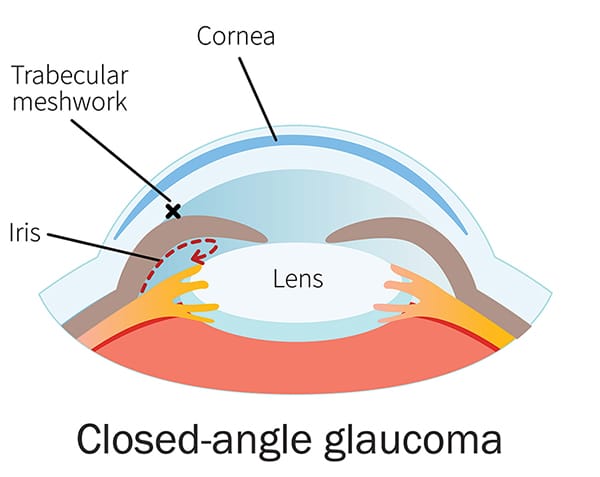
Closed-angle glaucoma, also referred to as acute angle-closure or narrow angle glaucoma, refers to a condition where the eye pressure is also increased, but it is because the angle is closed in many or most areas. Closed-angle glaucoma is very different from open-angle glaucoma because eye pressure usually rises very rapidly when the drainage area of the eye suddenly becomes blocked or covered over by the iris. With closed-angle glaucoma, the space between the iris and the drain is not as wide and open as it should be and the outer edge of the iris bunches up over the drainage canals when the pupil enlarges too much or too quickly.
The increase in eye pressure in this case also leads to optic nerve damage and possible vision loss. This condition generally brings on very noticeable changes and damage can occur quickly. Symptoms or signs of acute angle-closure glaucoma may include hazy or blurred vision, the appearance of rainbow-colored circles around bright lights, nausea or vomiting, severe eye and head pain or sudden sight loss. It is important that you seek immediate care from an ophthalmologist who is specialized in glaucoma, such as our highly trained glaucoma doctors at Wolfe Eye Clinic.
Normal-tension glaucoma is also known as low-tension or normal-pressure glaucoma. In normal-tension glaucoma, the optic nerve is damaged even though the pressure in the eye is not very high. It is unknown why some people’s optic nerves are damaged at essentially normal pressure levels. Those at higher risk for this form of glaucoma are people with a family history of glaucoma and people of Japanese ancestry. Early diagnosis in these individuals can be challenging, since intraocular pressure measurement is a common way to screen for glaucoma. In these cases, eye pressure screening comes back as normal, so it must be diagnosed by evaluating the optic nerve for signs of damage.
Secondary glaucoma occurs when another disease causes or contributes to increased eye pressure, resulting in optic nerve damage and vision loss. Secondary glaucoma can occur as the result of an eye injury, vascular event, inflammation, tumor, or in advanced cases of cataract or diabetes. It can also be caused by certain drugs such as steroids. This form of glaucoma may be mild or severe, depending on the underlying cause, and regular exams by your eye doctor can help to diagnose this at an early stage. Your eye doctor, or optometrist, can help you find a glaucoma specialist near you— Wolfe Eye Clinic glaucoma doctors work very closely with optometrists in Iowa and offer care around the state.
These are common questions and Wolfe Eye Clinic is here to help. Your eye doctor, an optometrist or ophthalmologist, should be seen yearly if you have a family history of glaucoma, or you are over the age of 40 to help monitor for eye diseases or developments. Wolfe Eye Clinic offers specialized glaucoma doctors who are skilled ophthalmologists with expertise in evaluating and treating all types of glaucoma. Your optometrist may refer you to a glaucoma specialist if symptoms warrant further treatment or surgical care. Wolfe Eye Clinic offers glaucoma specialists in Iowa at our locations in Ames, Ankeny, Cedar Falls, Cedar Rapids (Hiawatha), Des Moines, Marshalltown, Ottumwa, Pleasant Hill, and Waterloo. Give us a call at (833) 474-5850 to schedule an appointment.
With more than 40 locations throughout Iowa, expert eye care is always close to home.
Whether you need a routine eye exam or advanced surgical care, our team is here to help you see your best.