
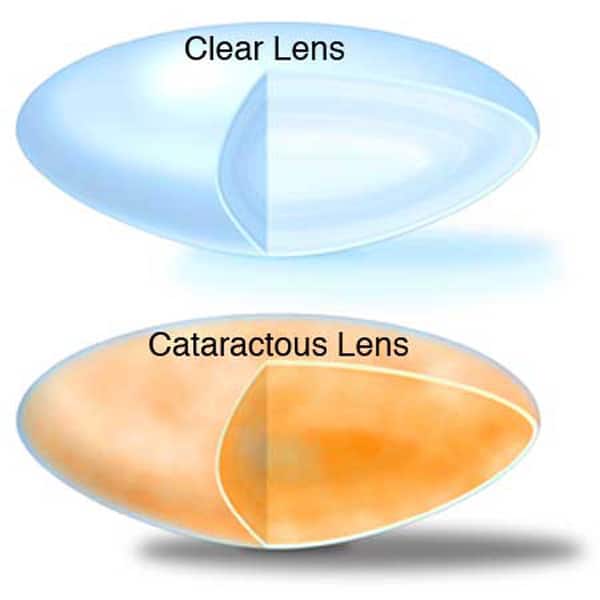
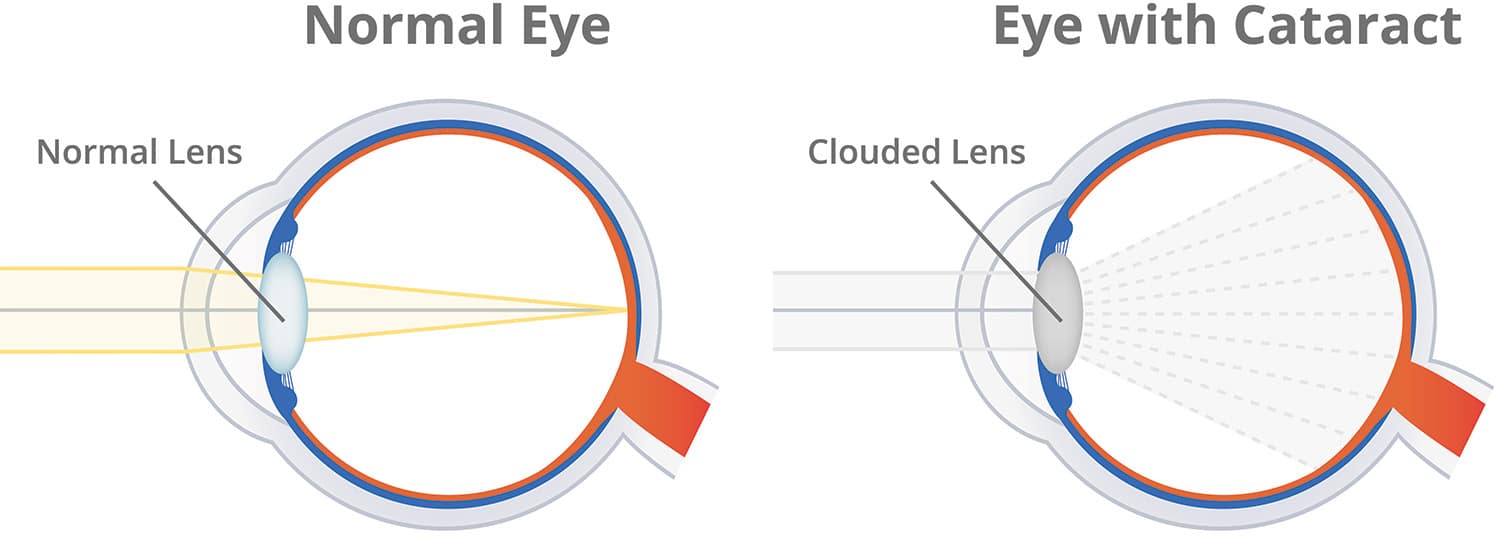
A cataract forms when the eye’s natural clear lens becomes cloudy due to the buildup of proteins. Your lens helps you focus and see things sharply, both up close and far away. The gradual clouding of your eye’s lens obstructs light and may increasingly interfere with your everyday life, restricting the things you do. A cataract also causes the clear lens to slowly change to a yellowish-brownish color which may add a brownish tint to your vision.
If you have a cataract, you are not alone. Cataracts are considered painless and a normal part of the aging process, which can begin to develop as early as the age of forty. According to the National Eye Institute, over fifty percent of Americans over the age of 80 have cataracts or have had cataract surgery. The process is generally gradual, and patients may not even see initial symptoms until they have an eye exam with an eye doctor and are told of the initial cataract development. The Iowa cataract surgeons at Wolfe Eye Clinic are specially trained to evaluate cataracts at every stage and provide the optimal treatment plan for each unique case.
Maybe you have noticed your vision becoming foggy or your optometrist recently provided you with a referral for cataract surgery. Perhaps you are supporting a loved one who is thinking about cataract eye surgery. No matter how cataracts have impacted your life, Wolfe Eye Clinic has cataract specialists near you and we are here to help when they do.
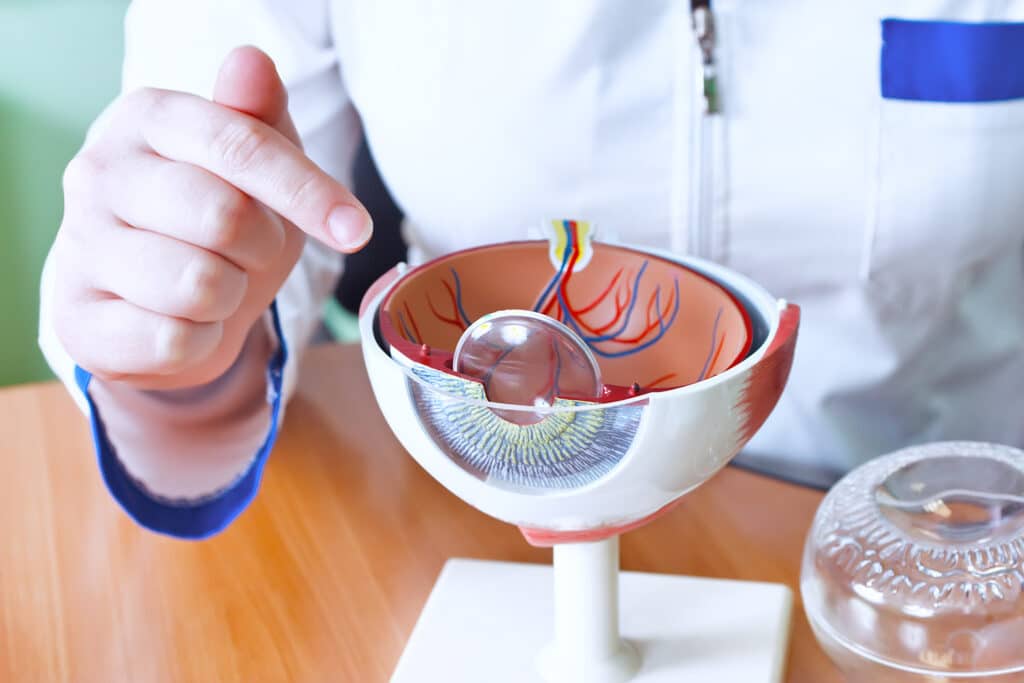
A cataract is defined as a clouding of the natural lens of the eye. The natural lens is about the size of an M&M candy and sits just behind the colored iris of the eye. When a person is born, the lens is clear. However, with time protein within the lens clumps together and starts to cloud. A cataract also causes the clear lens to slowly change to a yellowish-brownish color which may add a brownish tint to your vision.
Frequent eyeglasses prescription changes
Although cataracts typically develop as a result of aging, there are other types that may occur.
Traumatic cataracts cloud your eye’s lens similarly to a standard cataract but develop as a result of trauma or blunt force that disrupts the lens fibers. Due to the traumatic injury, the lens can be either partially or completely displaced or even ruptured not only contributing to the cataract but potentially causing other eye issues as well.
Most patients develop cataracts due to the natural aging process, however, some babies are born with a cataract known as a congenital cataract. Diabetes, trauma, infection or other issues may be factors that contribute to the cause of congenital cataracts. Whether or not the cataract needs to be removed by a cataract surgeon depends on its location, density and impact on vision. Sometimes, these cataracts are so small that they do not affect vision and do not require removal.
Currently, there is not a way to prevent cataracts. Helpful ways to reduce your risk include:
It is recommended to schedule an eye exam at least once every two years, and more often for those with diabetes or signs of other eye problems such as macular degeneration or glaucoma. Early detection and treatment for many eye diseases increase the chance to save your sight.

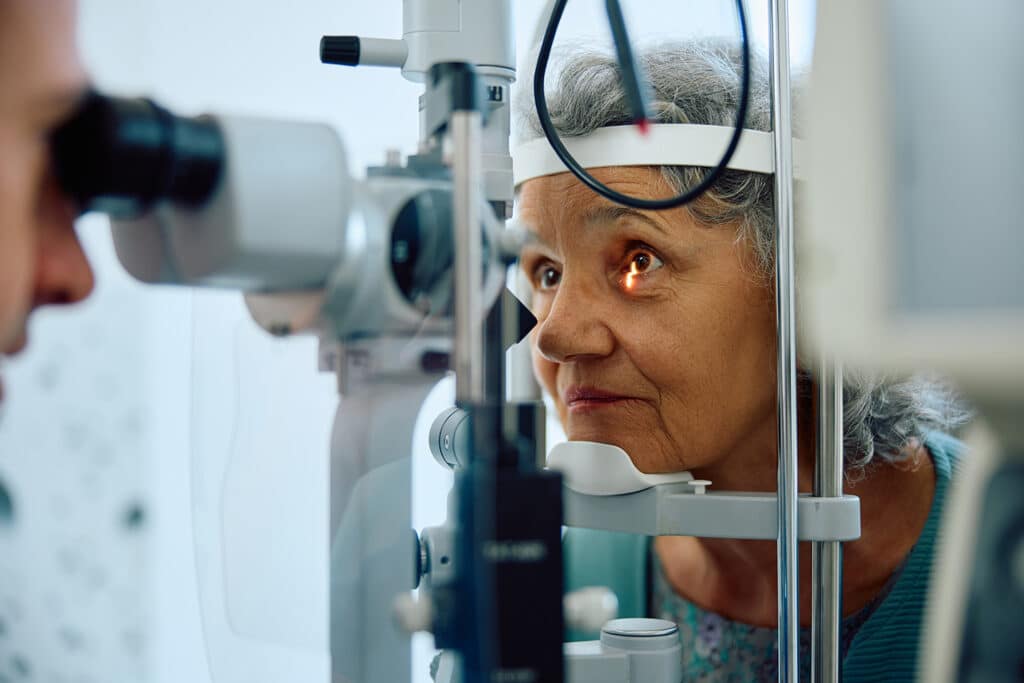
We know there is a lot of information and choices associated with cataracts and cataract surgery. That is why the first step toward a life without cataracts is meeting with your cataract surgeon to determine and develop a customized cataract treatment plan. This appointment is called a cataract evaluation where we perform a comprehensive dilated eye exam and advanced testing to determine whether surgery is the best cataract treatment option and your replacement lens choices. Additional testing may be performed during your cataract evaluation if there are other health concerns present such as diabetes.
When considering cataract surgery, there are many replacement lenses to choose from, which are known as intraocular lens or IOLs. Your lens choice is implanted in place of your natural lens during cataract surgery when your cataract is removed. Your lens options will be determined the day of your consultation. Our specialty cataract teams perform several advanced tests to evaluate which lenses you qualify for based on your eye’s anatomy. During your evaluation, you and your surgeon will discuss the lenses most appropriate in helping you achieve your vision goals.
For the appointment, you can expect to be with us for up to three hours and a driver is required for your safety due to the heavy dilation we administer for testing. Although cataract surgery is performed only one eye at a time, your cataract evaluation will examine both eyes in order to develop a more thorough cataract treatment plan. If both eyes have cataracts ready for removal, two separate surgeries are scheduled typically a few weeks or more apart.
A referral from your optometrist is not required for a cataract evaluation. However, we always recommend annual eye exams with your eye doctor to help detect cataracts early on and monitor their development. Plus, your optometrist can easily set up a cataract evaluation appointment with us on your behalf. It’s that easy!

Your surgeon may also suggest additional ways to enhance your surgery such as laser-assisted cataract surgery or options for fine-tuning your vision. For example, if you are looking to eliminate or decrease your need for glasses, your surgeon may discuss surgical options with you. Based on your testing results and lifestyle goals, all options are discussed at your cataract evaluation. Find out more information on cataract surgery with Wolfe Eye Clinic here.
With more than 40 locations throughout Iowa, expert eye care is always close to home.
Whether you need a routine eye exam or advanced surgical care, our team is here to help you see your best.